
What Is a Disc Herniation? Understanding the Cause of Your Back Pain
- Dr. Logan Bates

- Apr 9
- 2 min read
Updated: Apr 20
If you’ve been told you have a “disc herniation,” it can sound serious—and even a little scary. The good news is that most disc issues can be managed effectively with the right care.
At Tennessee Back Pain Center, we help patients in Murfreesboro, TN understand their condition and find real, lasting relief from back and neck pain.
What Is a Disc Herniation?
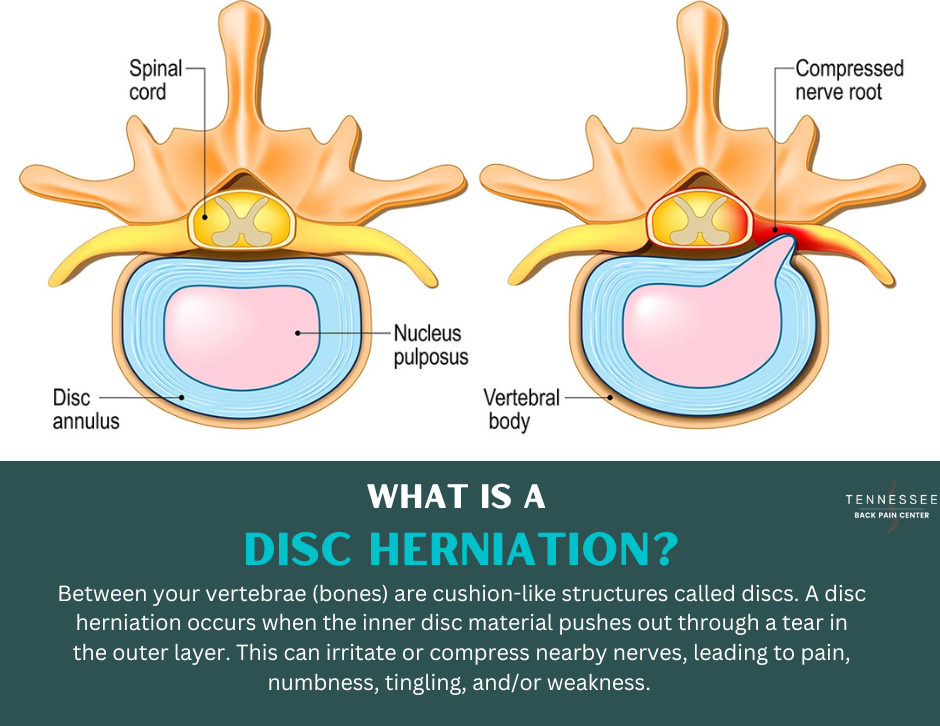
Your spine is made up of bones called vertebrae, and between each bone is a cushion-like structure called a disc.
Each disc has two main parts:
A tough outer layer (annulus fibrosus)
A soft, gel-like center (nucleus pulposus)
A disc herniation occurs when the inner gel pushes out through a tear or weakness in the outer layer.
This can irritate or compress nearby nerves, leading to pain and other symptoms.
Common Names for a Disc Herniation
You might hear a disc herniation referred to as:
“Slipped disc”
“Bulging disc” (slightly different, but often used interchangeably)
“Ruptured disc”
What Causes a Disc Herniation?
Disc herniations can happen suddenly or develop over time. Common causes include:
Lifting heavy objects improperly
Repetitive bending or twisting
Poor posture (especially prolonged sitting)
Age-related wear and tear
Sedentary lifestyle
Even something as simple as bending the wrong way can trigger symptoms if the disc is already weakened.
Symptoms of a Disc Herniation
Symptoms depend on the location and severity of the herniation.
In the Lower Back (Lumbar Spine):
Low back pain
Pain radiating into the buttock or leg (sciatica)
Numbness or tingling in the leg or foot
Muscle weakness
In the Neck (Cervical Spine):
Neck pain
Pain radiating into the shoulder or arm
Tingling or numbness in the arm or hand
Weakness in the upper extremity
Some people may even have a disc herniation without pain—but when nerves are involved, symptoms can become more noticeable.
How Chiropractic Care Can Help
At Tennessee Back Pain Center, we take a conservative, non-surgical approach to disc injuries whenever possible.
Chiropractic care may help by:
Reducing pressure on the affected disc
Improving spinal mobility
Decreasing muscle tension surrounding the spine
Decreasing inflammation
Relieving nerve irritation
Treatment plans may include:
Every patient is different, which is why we tailor care to your specific condition and lifestyle.
A disc herniation doesn’t mean you need surgery or long-term medication. With the right approach, many people recover and return to their normal activities. If you’re dealing with back pain in Murfreesboro, TN, Tennessee Back Pain Center is here to help you understand your condition and find real relief. Visit our website today to schedule an appointment!


Comments